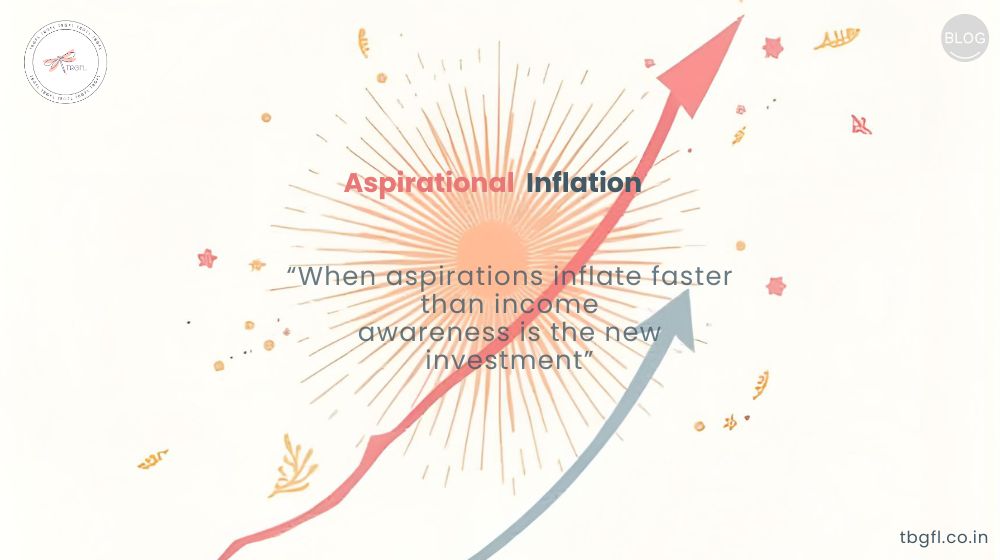
Aspirational Inflation: Why Your Salary Increase Still Feels Not Enough
It was a quiet Sunday evening.
Mr. Iyer, Arjun, and Preeti sat in their usual corner of the park, sipping tender coconut water.
Arjun was unusually quiet.
His smartwatch gleamed. His sneakers looked new.
And his eyes… restless.
Preeti smiled.
“New shoes, Arjun? Or new goals?”
He laughed softly.
“Both. I’ve been updating my goals — a bigger car, a larger apartment, better vacations… and suddenly, my savings feel too small. Maybe I’m not saving enough?”
Mr. Iyer smiled knowingly.
“That’s not price inflation, Arjun.”
“That’s aspirational inflation.”
What Is Aspirational Inflation?
Preeti leaned forward. “Aspirational inflation?”
Mr. Iyer nodded.
“When we talk about inflation, we usually mean rising prices. It’s external. Measurable. Something we plan for.”
“But aspirational inflation is different.”
“It’s when your wants grow faster than your income, your readiness, or your plan.”
What drives aspirational inflation?
- Social comparison
- Lifestyle exposure (especially social media)
- Salary increments and bonuses
- The feeling of “I deserve more now”
👉 It is not wrong to want more.
But it becomes risky when aspirations outpace awareness.
Lifestyle Inflation vs Aspirational Inflation
Many people understand lifestyle inflation — when expenses increase with income.
But aspirational inflation goes deeper.
- Lifestyle inflation → You spend more
- Aspirational inflation → You expect more
👉 And expectations can quietly create pressure.
The Hidden Cost of Rising Aspirations
Preeti reflected, “It’s like chasing a moving target.”
Mr. Iyer nodded.
“Exactly. Every time you reach a milestone, you raise the bar—without pausing to acknowledge progress.”
This leads to:
- Constant dissatisfaction
- Feeling “behind” despite growth
- Financial stress or overcommitment
👉 Just like price inflation reduces purchasing power,
aspirational inflation reduces contentment.
The Real Risk: Overstretch or Freeze
Mr. Iyer continued:
“The danger is subtle.”
People usually respond in two ways:
🔹 Overstretch
- Taking on bigger EMIs
- Upgrading lifestyle too quickly
- Compromising long-term financial goals
🔹 Freeze
- Feeling goals are too big
- Losing motivation to invest
- Avoiding financial decisions
👉 Both extremes slow down healthy wealth creation.
How to Set Financial Goals Without Pressure
Arjun asked, “So should we stop dreaming big?”
Mr. Iyer smiled warmly.
“Never.”
“Dream big. But dream grounded.”
Use SMART + ALIGNED Goals
When planning your financial goals, ensure they are:
- Specific
- Measurable
- Achievable
- Relevant
- Time-bound
But also…
👉 Aligned with:
- Your values
- Your pace
- Your peace
Preeti smiled.
“So it’s not about reducing dreams… it’s about pacing them?”
Mr. Iyer nodded.
“That’s the real balance.”
Awareness: The Most Underrated Investment
As the sun dipped below the trees, silence settled in.
Then Mr. Iyer spoke softly:
“We may not control prices. But we can control the pace of our aspirations.”
“When aspirations grow faster than income…”
👉 Awareness becomes your best investment
Arjun exhaled.
“Maybe I don’t need a bigger car right now.”
“Maybe I need a calmer mind first.”
Preeti smiled.
“That’s compounding wisdom.”
Final Reflection
In a world that constantly shows you more…
Pause and ask:
👉 Is this my need… or my next comparison?
Because true financial growth is not just about increasing income.
It is about aligning your aspirations with awareness.
🌿 Tiny Truth of Wealth
When aspirations grow faster than income,
awareness becomes your greatest investment.
Keep your goals steady, your gaze kind,
and let your growth be guided by alignment… not urgency. ✨