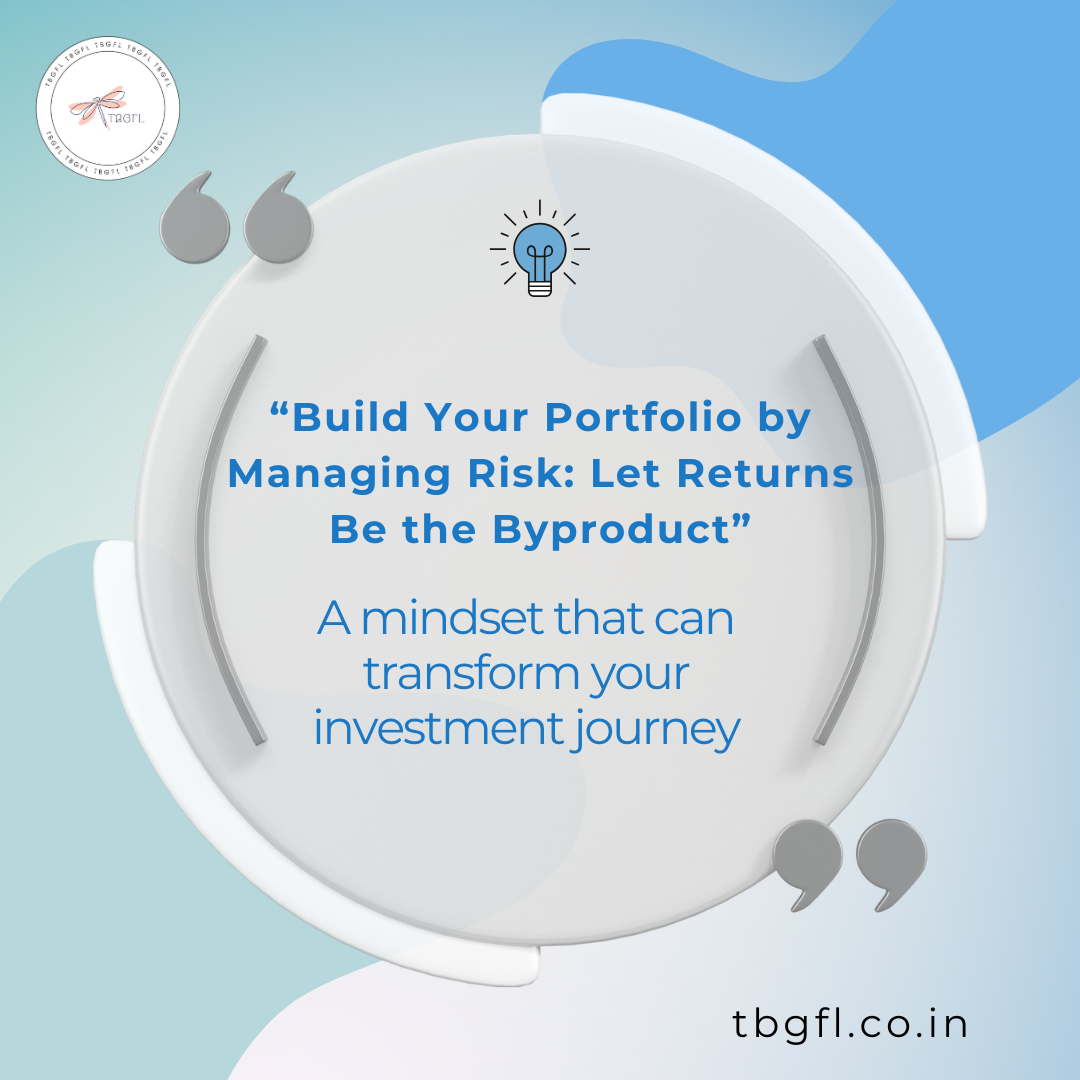
Investing is often seen as a race to achieve the highest returns. But what if you shifted your focus to managing risk instead? The perspective “Build your portfolio by how you manage your risk and let returns be the byproduct” emphasizes long-term stability and growth by minimizing potential downsides. Here’s how adopting this mindset can transform your investment journey.
- Understand Your Risk Tolerance
Every investor has a unique capacity to handle financial losses. Factors such as age, income stability, financial goals, and emotional resilience play a vital role in determining your risk tolerance.
- Key Tip: Assess your personal situation before taking on risk.
- Example: A young professional may be able to afford higher risks by investing in equity-heavy portfolios, while a retiree might prioritize low-risk, income-generating assets like bonds.
- Diversify, but Purposefully
Diversification is a cornerstone of risk management. By spreading your investments across asset classes and geographies, you can reduce the impact of a single asset’s poor performance.
- Key Tip: Diversify across stocks, bonds, gold, real estate, and even geographies to stabilize returns.
- Example: During the pandemic, portfolios diversified with gold or international equities outperformed single-asset portfolios.
- Focus on Asset Allocation
Your asset allocation—how much you invest in various asset classes—has a greater influence on your portfolio’s risk exposure than individual stock or fund selection.
- Key Tip: Strike a balance between growth and safety by setting appropriate asset allocation.
- Example: A 70:30 split between equities and debt can work well for a moderately aggressive investor.
- Control Behavioural Risks
One of the biggest risks to your portfolio isn’t the market—it’s you. Emotional decisions, like panic-selling during a market crash or succumbing to FOMO (fear of missing out) during a rally, can derail your long-term goals.
- Key Tip: Stay disciplined and avoid emotional investing.
- Example: Investors who stayed invested during the 2008 crash or COVID-19 dip saw markets recover and grow over time.
- Use Safety Nets to Absorb Shocks
Before investing, build a financial cushion to handle emergencies. This reduces the need to liquidate investments during crises and protects your portfolio’s long-term growth potential.
- Key Tip: Maintain an emergency fund equivalent to 6–12 months of expenses.
- Employ Risk Management Tools
Leverage tools and strategies to mitigate losses and stabilize your portfolio during turbulent times.
- Key Tip: Use stop-loss orders, portfolio hedges (e.g., options), and rebalancing strategies.
- Example: A portfolio heavy on equities could use gold or government bonds as a hedge.
Returns Follow Consistent Risk Management
By effectively managing risks, you protect your capital and enable it to compound steadily over time. This disciplined approach makes returns a natural byproduct of sound risk management rather than a speculative pursuit.
Key Takeaway
Instead of chasing high returns, ask yourself: “What risks am I exposed to, and how do I minimize them?” This shift in perspective turns the journey to wealth into a measured, strategic process. Managing risk not only safeguards your portfolio but also sets the stage for consistent and sustainable growth over time.
By focusing on what you can control—your risk exposure and behavior—you’ll find that returns take care of themselves.