In a world increasingly driven by automation, integrating automated systems into personal finance management can significantly enhance both ease and efficiency. Automating one’s finances has become a game-changer, streamlining processes and reducing the manual effort involved in everyday financial tasks.
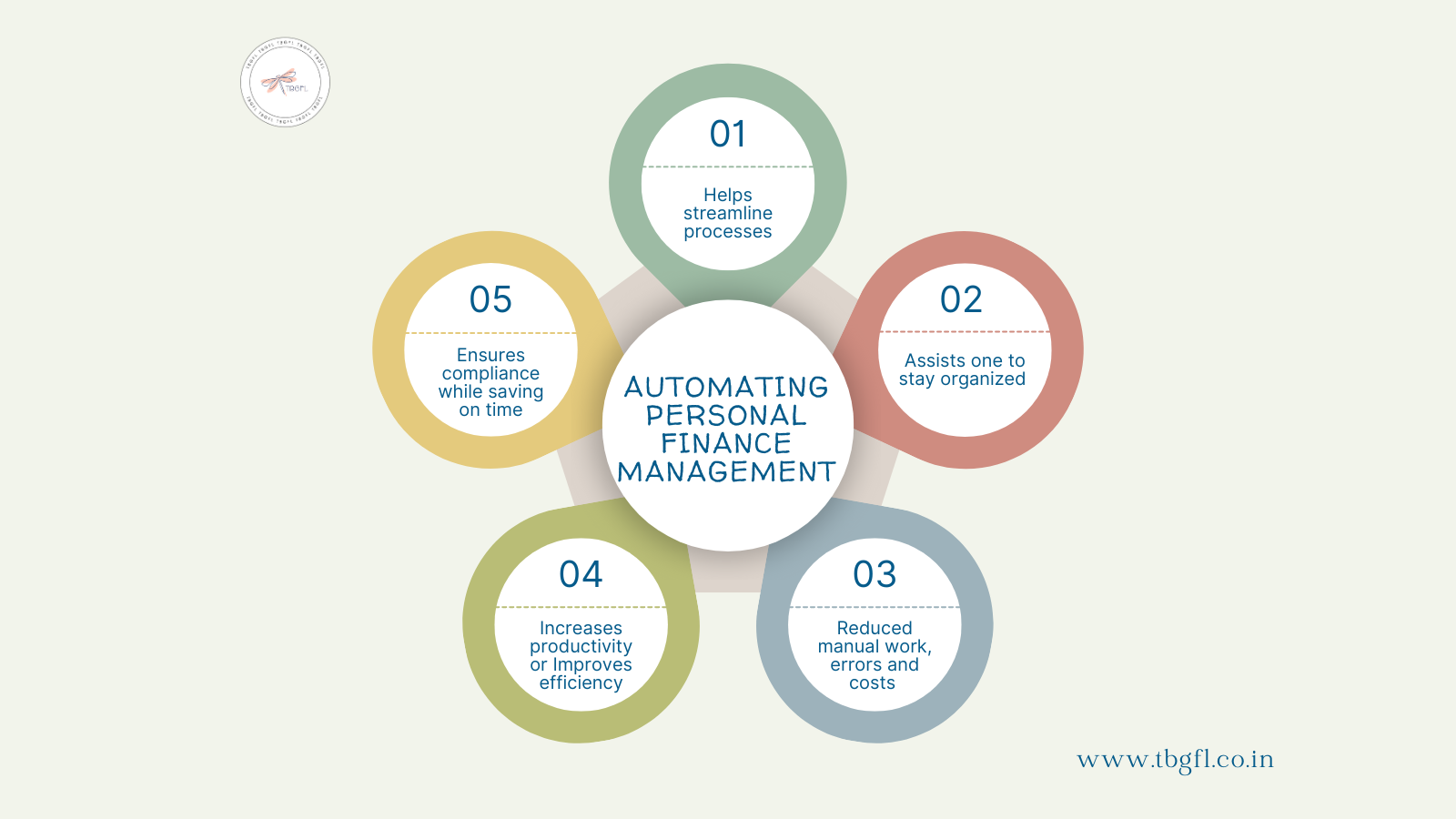
Reduce human error: One of the key benefits of automating personal finance is reducing human error. Forgetting a payment or missing a deadline can lead to costly late fees and damage to your credit score. Automating bill payments ensures that every payment is made on time without needing constant reminders or effort. This not only reduces the risk of penalties but also helps improve your credit score by maintaining a positive payment history.
Assists to stay organized: Moreover, automation helps individuals stay organized. Managing multiple financial responsibilities, like paying bills, contributing to savings, and investing, can be overwhelming. By automating these tasks, you ensure that each financial activity happens seamlessly and on time, reducing the burden of having to remember various due dates and amounts. This contributes to a sense of financial order and peace of mind.
Time-saving: is another major advantage. With automated systems in place, you no longer need to spend time manually transferring money, scheduling payments, or making routine investments. This saved time allows you to focus on other important aspects of life or even explore more advanced financial strategies. Automation eliminates tedious tasks, giving you back precious hours each month.
Financial Discipline: Automating your finances also encourages consistent financial behavior. For instance, setting up automatic transfers to savings or investment accounts ensures that you are regularly building your wealth, regardless of any fluctuations in your monthly schedule or motivation. This consistency helps instil good financial habits and builds wealth over time through the power of compounding. It also promotes discipline, ensuring that you stay on track with your long-term financial goals without the need for constant oversight.
Reduce costs: Another significant advantage is cost reduction. Automation can help avoid late fees, overdraft charges, and missed opportunities for savings or investment. By setting up automatic payments and transfers, you ensure that you are making the most of your available funds, minimizing unnecessary expenses, and ensuring that your money works for you in the most efficient way possible.
Increase productivity and efficiency: In addition, automating financial tasks can increase overall productivity. With the administrative side of your finances handled, you can focus on optimizing your financial strategies, researching new investment opportunities, or planning for long-term goals like retirement or purchasing a home. This shift from managing to optimizing boosts your overall financial productivity and success.
Ensures compliance: Automation also ensures compliance with financial obligations. Whether it’s making monthly debt repayments, contributing to retirement plans, or paying taxes, automation ensures that you meet these requirements promptly and consistently, reducing stress and ensuring that you remain financially compliant.
In conclusion, automating personal finance management simplifies financial life, saving time, reducing errors, improving efficiency, and ensuring compliance. By embracing automation, you not only streamline your financial activities but also empower yourself to build wealth, reduce costs, and confidently manage your financial future.
What are the actual steps that one can take to adopt automation?
Automation in personal finance – involves setting up systems where financial tasks, such as saving, investing, or paying bills happen automatically without manual intervention.
This can include setting up standing instructions or automatic transfers to Savings accounts, auto debit facilities for payment of bills, credit card dues or other debt, premiums, investing in SIP etc. One can also set up spend alerts, especially on CC so that they are alerted as they hit certain level of their spends like 80% of their total spending limit for the month or a certain figure say 25K for the spend period.
To ensure the savings you envisaged when you budgeted are secured straight away, one can set up RD or auto sweep in to FD to ensure that balances meant as savings is not left in SA where it can be spent away on impulse and is invested in the desired asset.
Besides there are many apps that one could use to help to set up budget, track expenses against budgets etc to remain on track. Use automation to Manage your Money Smartly!